Book Review: Life After Cars by Sarah Goodyear, Doug Gordon, and Aaron Naparstek
How our cars are killing us and not making life better.
I should start this review by saying I enjoy almost all media I consume. If I have a good time, I will love it. However, I hold an unreasonable standard against books. I can sit through a two-hour movie that’s bad and still have a good time. I can dance to any song, and podcasts are easy for me. Books, even audiobooks, I hold a high standard to for no reason. Maybe my high school English teacher taught me to be more critical while reading. Books are hard to impress me, which is probably why I enjoy them so much. Life After Cars by Sarah Goodyear, Doug Gordon, and Aaron Naparstek found me critical, annoyed, and inspired. Through the stories, statistics, and sentiments told through this book, I saw a clear life of what society could be without our reliance on cars.
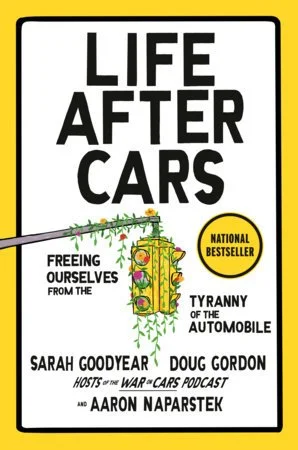
Book cover by Joel Holland.
Life After Cars is written by War on Cars podcast hosts and advocates Sarah Goodyear and Doug Gordon, along with Aaron Naparstek. This book hammers in the idea that cars are killing us in various ways and making us less independent. From real examples to studies shown, this book makes the case, in America, we rely too much on the thing, which is slowly killing us, cars. As someone who hates my car, driving, and the noise of the road, I was all for this sentiment. Some chapters talk about how cars have intersected with people’s identities. Such as their Cars are Unjust chapter talking about how people of color have been negatively affected by our reliance on cars. In the same chapter there are talks about how women have also been disproportionally affected by cars. The authors share stories of many people and how they were affected by cars, and how others have advocated safer communities. Examples of other countries and cities implementing alterative transport are shared and the journey to get there. The front inner jacket states “over forty thousand people in the United States are killed by cars ever year. Global carbon emissions from SUVs alone have reached nearly 1 billion tons annually. Only 11 percent of American children walk or bike to school.” With this hard-hitting start to the book, it creates an interesting dynamic which is cars vs. people.
This book covers a significant amount of information and I appreciate this. I never found information to be repetitive, and it had a nice flow. The page count is 282 pages, and the audio version is only 7 hours and 37 minutes, which is reasonably short. I didn’t feel it dragged on or left too much out. Their points were backed by facts and made sense, with a provided lengthy bibliography consisting of primary sources and peer reviewed articles. They presented a compelling case for a life after cars. They provide harrowing details which explain the war on cars. “In 2022, 1,129 children aged fourteen and younger were killed in a motor vehicle crashes in the US, and tens of thousands more were injured. Yet loading the kids into the car is an unquestioned action-indeed, an unquestionable one” (Goodyear, et al. p. 100-101). Life After Cars takes an aim at an integral part of so many Americans, our cars and car culture, and provides evidence on why this culture is not enriching us, but degrading and killing us. From noise pollution to displacement to police brutality, Life After Cars shows us what cars have been doing, suppressing us. Goodyear, Gordon, and Naparstek show us the negatives of cars, not just cost but environmental impact, racial and gender disparities, toxic masculinity, cars as weapons, and much more.
From the beginning of the book I had one guiding question, what is the solution? Disabled and elderly people use cars to get around and there is not infrastructure in many cities and towns to allow them to use transit in a safe and efficient way. Little was said about this, and I found it disappointing. We cannot leave the elderly and disabled people out of conversations because it might make a case for cars. The authors had said they are based out of New York City even though they had lived in other places prior. I had hoped this wasn’t going to involve them leaving rural communities out of conversation, but unfortunately it did. All their examples involved a big city and so did their solutions. I don’t think it is fair to leave rural communities, affected more by climate change than those in suburbs and urban areas (Boyle), out of the conversation. In other words, we also drive Hummers. I was also craving a little more conversation about types of public transit and how much better each one is against the car. How can public transit be implemented in small towns? Los Angeles is so reliant on car transport, what can they do to reduce this? But the conversation revolved around New York City mostly. I wanted to talk about how cars are made now, versus when they were first invented. How cars have gotten bigger, lights brighter, and carbon emissions much higher.
Despite my misgivings and critiques of the book, I found the overall information useful and can change someone’s perspective. I would defiantly recommend this to someone who drives more than 30 minutes a day, who commutes often by car, who lives in a city, all new drivers, and anyone who owns a truck, van, or SUV. And especially if you own a Hummer. Our society and identities are very much intertwined with cars. Our biggest events involve cars and the day we get our license becomes a milestone in our life. It is important for us to take our towns and cities back away from cars and start prioritizing people. Most towns don’t have protected bike lanes, safe walking, well-lit streets for pedestrians at night, and crosswalk signs. The streets are not safe for any child or adult. The solution isn’t bigger roads, more highways, electric cars, self-driving, bigger cars, or cheaper gas prices. We use cars too much and we don’t need to.
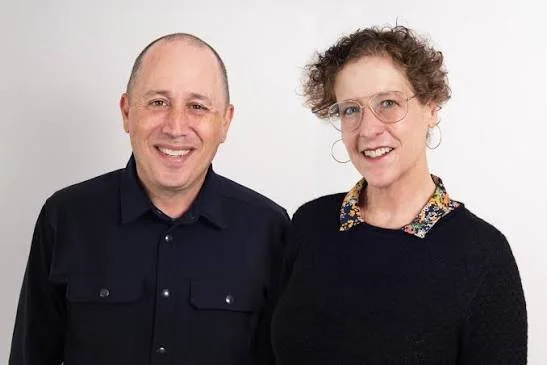
Doug Gordon and Sarah Goodyear, hosts of War on Cars podcast and authors of Life After Cars.
It’s hard to write a book about why what everyone does is wrong and not come off like complete assholes, but Life After Cars did that. I finished the book by not hating the author and finding them pretentious but wanting to read more.
Bibliography
Boyle, Patrick. Rural Americans Find Little Escape from Climate Change | AAMC, www.aamc.org/news/rural-americans-find-little-escape-climate-change. Accessed 19 July 2026.
Goodyear, Sarah, et al. Life after Cars: Freeing Ourselves from the Tyranny of the Automobile. Thesis, an Imprint of Penguin Random House LLC, 2025.
“Rural Impacts | U.S. Climate Resilience Toolkit.” U.S. Climate and Resilience Toolkit, toolkit.climate.gov/rural-impacts. Accessed 19 July 2026.